
Volcanoes Safaris Partnership Trust First results of Chimpanzee Monitoring Project in Kyambura Gorge, Uganda
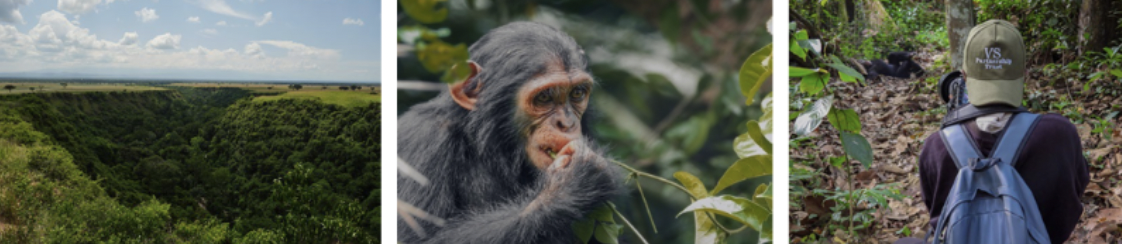
On World Chimpanzee Day, the Volcanoes Safaris Partnership Trust (VSPT) Chimpanzee Monitoring Project is delighted to announce that we have identified positively 25 chimpanzees in Kyambura Gorge since the project was launched in February 2026. Field research will continue to establish the presence of other individuals in the community.
This is the first permanent, science-based monitoring programme to safeguard the 'Lost Chimpanzees of Kyambura Gorge’ in partnership with the Uganda Wildlife Authority (UWA) and Jane Goodall Institute (JGI) while building on Nicole Simmons' research work over the past 20 years.
This small population is highly threatened with its tiny gene pool; externally the habitat is threatened by increasing human development.
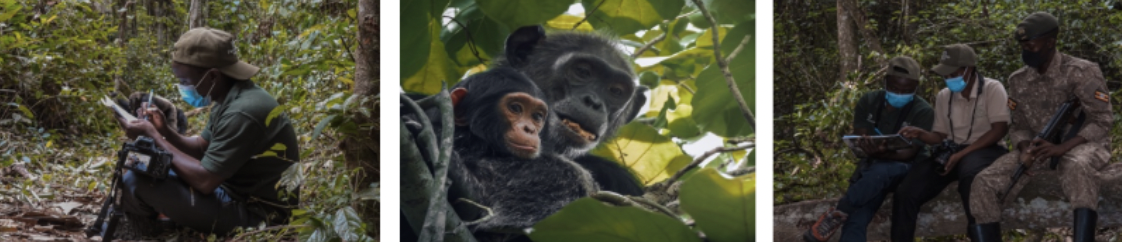
The chimpanzee monitoring programme is part of the VSPT Kyambura Gorge Ecotourism Project, a series of connected community and conservation initiatives that began in 2009 to safeguard the Kyambura Gorge ecosystem.
"The competition between humans and chimpanzees is becoming critical. I’ve come to realise that every individual chimpanzee matters to the survival of the community and every human community member surrounding the gorge is critical for the survival of the forest and the chimpanzee population on it holds.” — Andrew Kato, VSPT, Lead Researcher Kyambura Chimpanzee Monitoring Project
“We are excited to use the Kyambura chimpanzee population as a case study using field-based foot surveys, facial recognition and modelling.
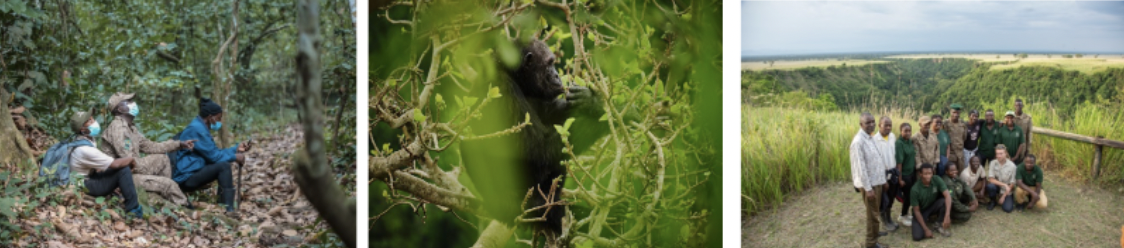
"This research will help understand if the demographic changes in the chimpanzee population are stable, and to identify changes early. As chimpanzees are long-lived and slow to reproduce, declines can remain undetected for years without the groundbreaking long-term scientific monitoring that VSPT is doing." — Dr. Alexander Braczkowski, VSPT Scientific Director
DONATE NOW: $5,000 contributes to salaries of the Chimpanzee Monitoring Project for 3 months.
Note for Editors
About Volcanoes Safaris Partnership Trust
Volcanoes Safaris Partnership Trust (VSPT) is a non-profit organisation in Uganda that connects Volcanoes Safaris lodges to the neighbouring communities and conservation activities. VSPT works with local communities and conservation partners to enrich local livelihoods, promote the conservation of the great apes, restore natural habitats and reduce human-wildlife conflict.
Contributions made through Empowers Africa from US residents are tax-deductible.
Kyambura Gorge, on the edge of Queen Elizabeth National Park in Western Uganda, is at the centre of an important area for avian, primate and wildlife biodiversity in Africa. The 11km long gorge is home to an isolated group chimpanzees which Nicole Simmons, a field researcher started studying in 2006.
World Chimpanzee Day
On 14 July 1960, Dr Jane Goodall began her pioneering study of wild chimpanzees in what is now Gombe Stream National Park. Her groundbreaking work brought global attention to the chimpanzees. Every year, people around the world mark World Chimpanzee Day to raise awareness about the importance of protecting these endangered great apes. We are proud to partner with the Jane Goodall Institute to protect threatened chimpanzees and other wildlife, while reducing human-wildlife conflict.
The Chimpanzee Monitoring Project
The project is based at the VSPT Research Centre, Kyambura Gorge Lodge, in Queen Elizabeth National Park, Uganda. The research is led by VSPT researchers Andrew Kato and Athens Niwahereza, both from villages bordering Kyambura Gorge, working alongside UWA rangers and Scientific Director Dr. Alexander Braczkowski. The project team has followed the chimpanzees for 34 sampling days, over 500 kilometres alongside UWA rangers and local community trackers.
Data monitoring
The idea of field-based foot surveys, individual facial recognition of chimpanzees, and combining this with spatially-explicit capture recapture modelling, is something new for chimpanzee monitoring. The data is currently being analysed under a spatially-explicit Bayesian capture recapture modelling exercise and is expected in a peer-reviewed publication at the end of 2026.